Can you smell that? Mmm…french fries. But are potatoes healthy? Should we even eat them anymore? Honestly, it depends.
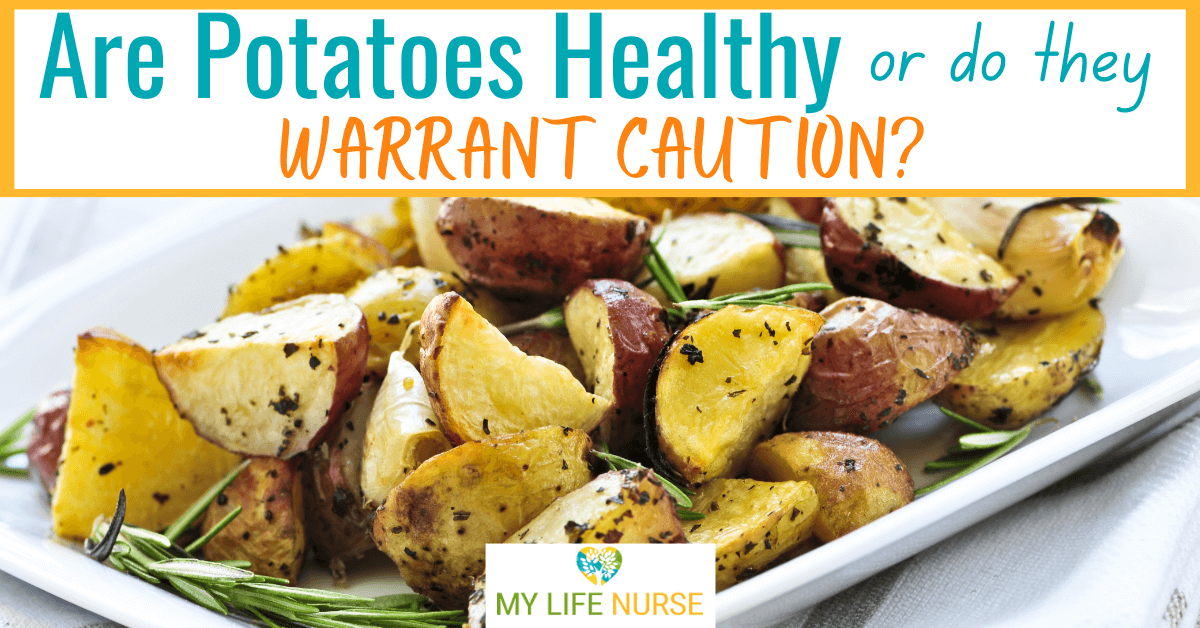
I’m guessing a family phrase of, “Ya gonna eat the rest of those fries?” is a dead giveaway that we like to eat them.
What’s your favorite way to eat a potato? Baked or mashed, or do you prefer it as a chip?
Or all of the above? As Americans, we all love to eat them! The National Potato Council reported we each consumed 111 pounds in 2014!
But should we be eating so much of them?
The answer: it depends.
Need some help finding time to take better care of yourself? Get your FREE copy of the Self-care Starter Guide HERE!

Are potatoes healthy? Do you have diabetes or are you trying to manage or lose weight? Ok, pop quiz time.
If I asked you if potatoes are considered a vegetable or a grain, what would you say?
- Did you say a vegetable? Then you would be correct. Botanically, a potato is a vegetable.
- If you said a grain, then you would also be correct. Nutritionally, a potato is a starchy food due to its high carbohydrate content.
The American Diabetes Association classifies it as a starchy vegetable and has it listed with the minimally processed carbohydrate foods.
The potato is a starchy vegetable, and you should treat it like a carbohydrate or grain.
Therefore, although the potato is healthy nutritionally, for weight loss or blood sugar management, it helps to consider the potato in the starchy vegetable group when making food choices.
Here’s why:
A vegetable (non-starchy vegetable) contains 5 grams of carbohydrates per serving (1/2 cup cooked or 1 cup raw)
A potato (starchy vegetable) contains 15 grams of carbs per serving (1/2 cup or 1 oz cooked)
THAT is a big difference when you apply it to calories!
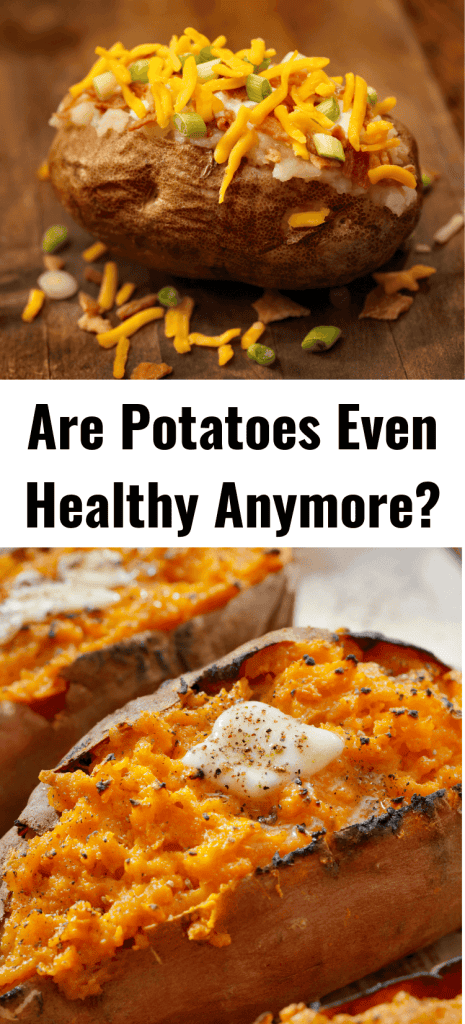
Carbohydrates have four calories per gram. So, if you compare, say a serving of green beans to a serving of potato there will be 20 calories in the green beans and 60 in the potato. That doesn’t sound like a whole lot, but it adds up fast, and often, we eat more than one serving.
The proper serving size is much smaller than you think!
Boom! Most of the time, we do not eat the proper serving size (no matter how they are prepared), and we get way more calories than we think. If you are working on weight loss, you can quickly exceed your daily calorie limit with an oversized potato serving!
Ain’t nobody got time for that!
Here’s an old standby approximation. Make a fist and pretend to pound on a table. Now, look at the top of your fist facing the ceiling. That circle you see formed is a proper potato serving size. Whether it is a whole potato, or if you need to, picture the opening of a 1/2 cup.
What about french fries, you ask?
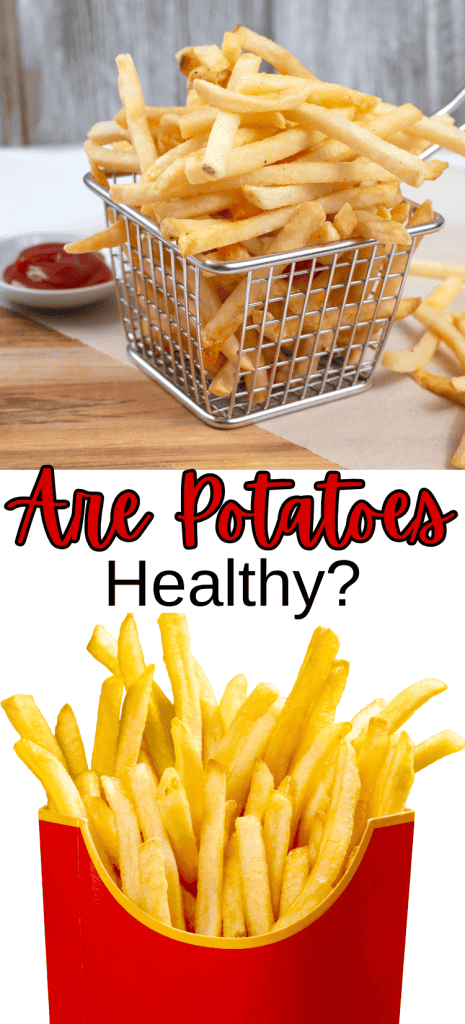
Most are not served by weight but by volume per container. However, a well-known fast-food chain has approximately:
- 2.6 oz in a small
- 4.0 oz in a medium
- 6.0 oz in a large
These are well over the 1-ounce serving size.
How good are you at eating just 4-8 fries???
The next point might influence your decision to eat or skip them altogether.
My referral and affiliate links are below. If you click through & make a purchase, I may receive a commission at no additional cost to you. My full disclosure can be viewed for details.
The Glycemic Index of a potato will impact how you feel.
Do you ever feel sluggish or fatigued after eating potatoes-especially a lot of them? It may have rapidly raised, or ‘spiked’ your blood sugar.
A high glycemic index food turns into sugar in the bloodstream quickly. Foods are given values (based on scientific experiments and testings) of low, medium and high. Food that turns to sugar quickly will raise blood sugar levels and cannot be used for energy very long.
- The goal of using a glycemic index is to eat foods that stay in the low-medium range.
- If you eat food with a high GI, you would want foods with a low GI on the rest of your plate.
A high glycemic load food will cause blood sugar and insulin spikes. Spikes are typically followed by crashes, which is what we all want to avoid, but it can cause havoc for people trying to manage blood sugar levels.
- The goal of using a glycemic load is to eat foods with a low glycemic index and a low glycemic load.
- Folks who have diabetes, or are managing their weight should eat foods primarily with low GL and mediums, and high foods should be eaten in moderation.
Please refer to the glycemic index and glycemic load chart below.
| Glycemic Index | Glycemic Load | |
| Refers to the measure of how quickly food breaks down into sugar in your bloodstream.
< 55 Low 56-69 Medium >70 High | Refers to the measure of how much carbohydrate of food you are getting.
< 10 low 11-19 medium > 20 high | |
| Potato | High | High |
| Cauliflower | Low | Low |
| Carrot | High | Low |
| Green Bean | Low | Low |
| Oatmeal | Medium | Medium |
| Popcorn | Low | Low |
| Donut | High | High |

Looking for a way to stay motivated to take better care of yourself? Click my affiliate link to check out my Bible study.
Are Potatoes Healthy? The Potato Truth
Ultimately, foods with BOTH a low glycemic index and glycemic load should be staples in your diet. AND a proper serving size is imperative. The amount of the potato is key. Eating a larger serving size may push you into a medium or high GL!
In conclusion, knowledge is power in making healthy choices.
When deciding if you should, or should not eat potatoes, the first consideration on the road to feeling better is whether you have diabetes or are someone who is trying to lose or manage your weight.
Does that answer tell you to change how you eat potatoes or maybe even your lifestyle? Then, you are already on the road to feeling better!
Don’t forget your FREE Self-care Starter Guide! Get it HERE.
Thanks for reading! Know someone who would benefit from reading this post? Share it on social media!


Ready for more? Here are my latest posts!
- Best Printable Advent Bible Reading Plan for Rest
- 4 Quick & Easy Tips to Lower Blood Pressure
- When the Holidays Feel Heavy: 9 Simple Self-Care Tips for Missing Someone You Love
- 10 Frugal Foods to Eat for a Healthy Pregnancy and Baby
- 9 Must-Read Blog Posts to Manage High Blood Pressure Naturally
Originally published on March 24, 2018

Be sure to grab your FREE Self-care Starter Guide! Lisa Kimrey is a 33-year veteran registered nurse (RN), speaker, and author of the Bible study, The Self-care Impact: Motivation and Inspiration for Wellness. At Mylifenurse, Lisa combines her nursing expertise with Scripture-based encouragement to show readers who serve and care for others how to begin and maintain their self-care journey – without feeling guilty or overwhelmed – to feel happy, healthy, and rejuvenated.